




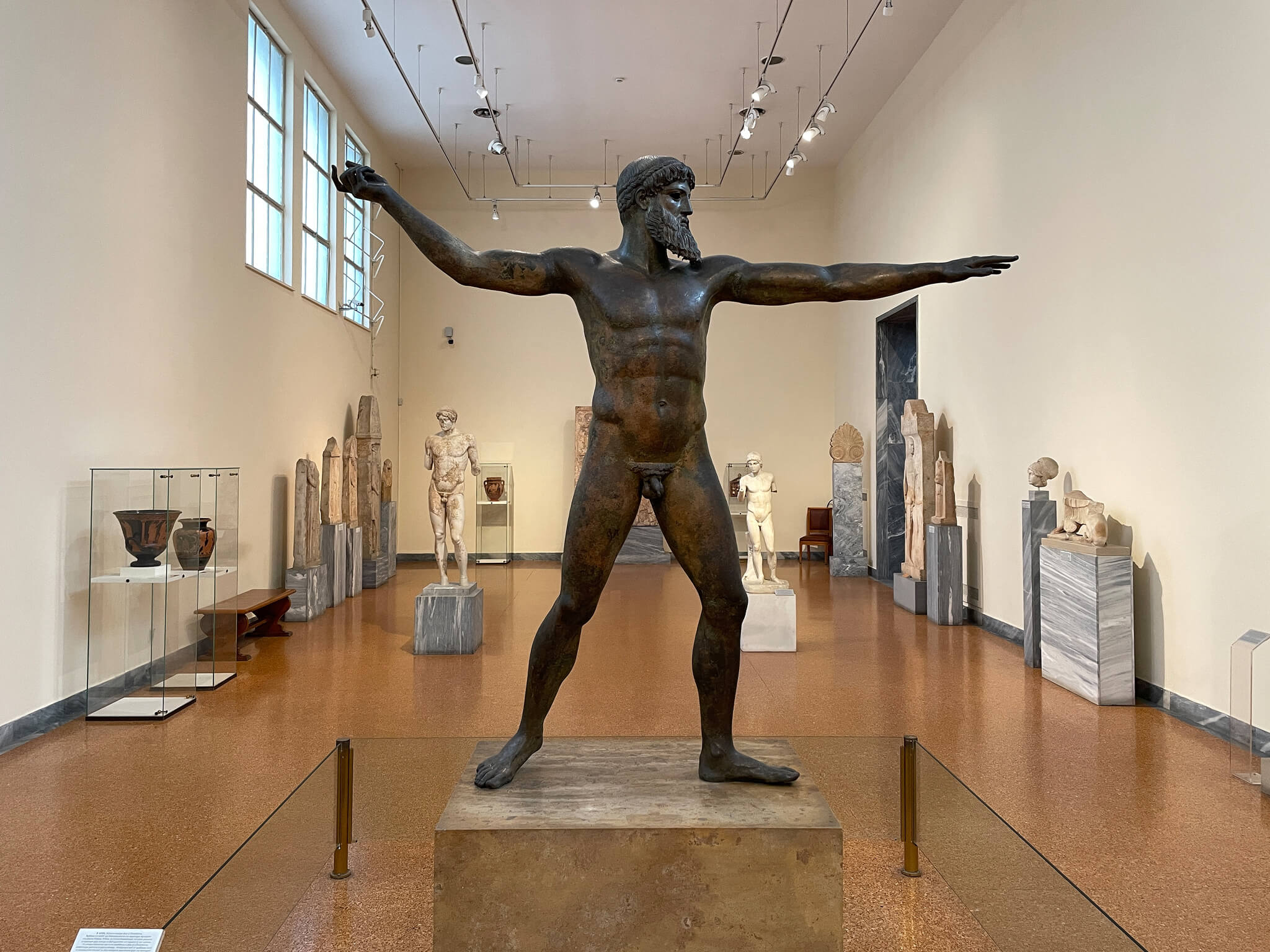
The Mystery of the God's Weapon
People still debate whether the majestic bronze statue recovered from the sea off Cape Artemision represents Zeus or Poseidon. Now housed in the National Archaeological Museum of Athens, the god stands poised in motion: muscular, bearded, his arm outstretched, ready to hurl a now-missing weapon. Was it a thunderbolt, marking him as Zeus, or a trident, the emblem of Poseidon? The uncertainty only adds to the sculpture’s mystique, capturing the enduring rivalry and intertwined identities of the two great Olympians.
The origin of Zeus’s thunderbolt is described in Hesiod’s Theogony, a tale of the genealogy of the gods. Zeus obtained his thunderbolt from the cyclopses, in the same way that Poseidon was given his trident: when the Olympian gods freed the cyclopses from Tartarus during the Titanomachy.
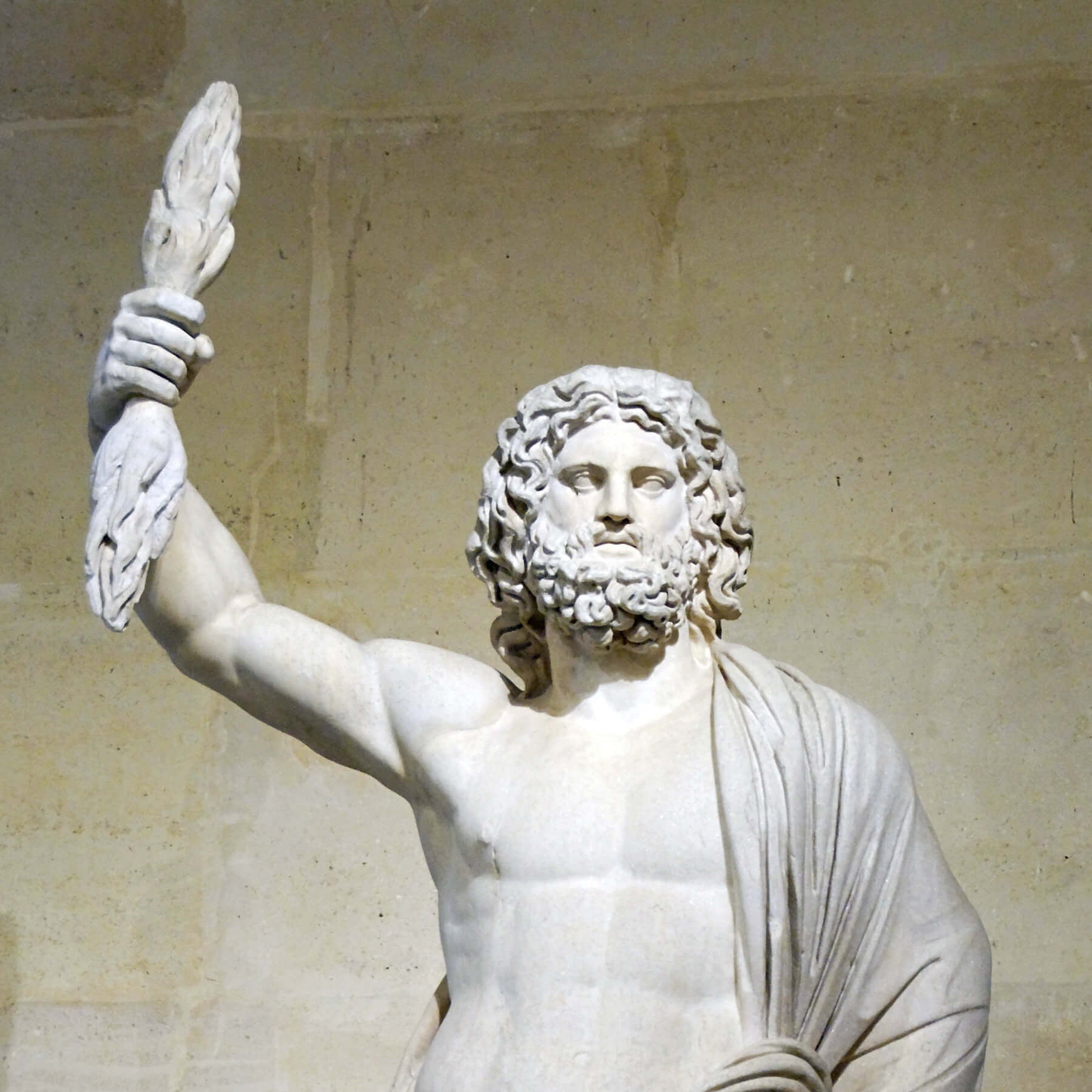
Aside from Hesiod, Zeus’s thunderbolt continues to appear throughout ancient literature. Herodotus’s Histories show us how the ancients attempted to link myth to reality. Herodotus explains that lightning from a storm tends to hit the highest objects in an environment, such as the tallest tree, because of Zeus’s pettiness: he cannot let his pride be injured by some other thing surpassing him in size and greatness. Zeus was known to use his thunderbolt to strike down his enemies, ex-lovers, and anyone, or indeed anything, that generally displeased him. It is hard to ignore the symbolism: an electrifyingly powerful weapon in the hands of a god with a thunderous temper.
Photo: By Niko Kitsakis. CC BY 4.0, https://commons.wikimedia.org/w/index.php?curid=152159378
Read more
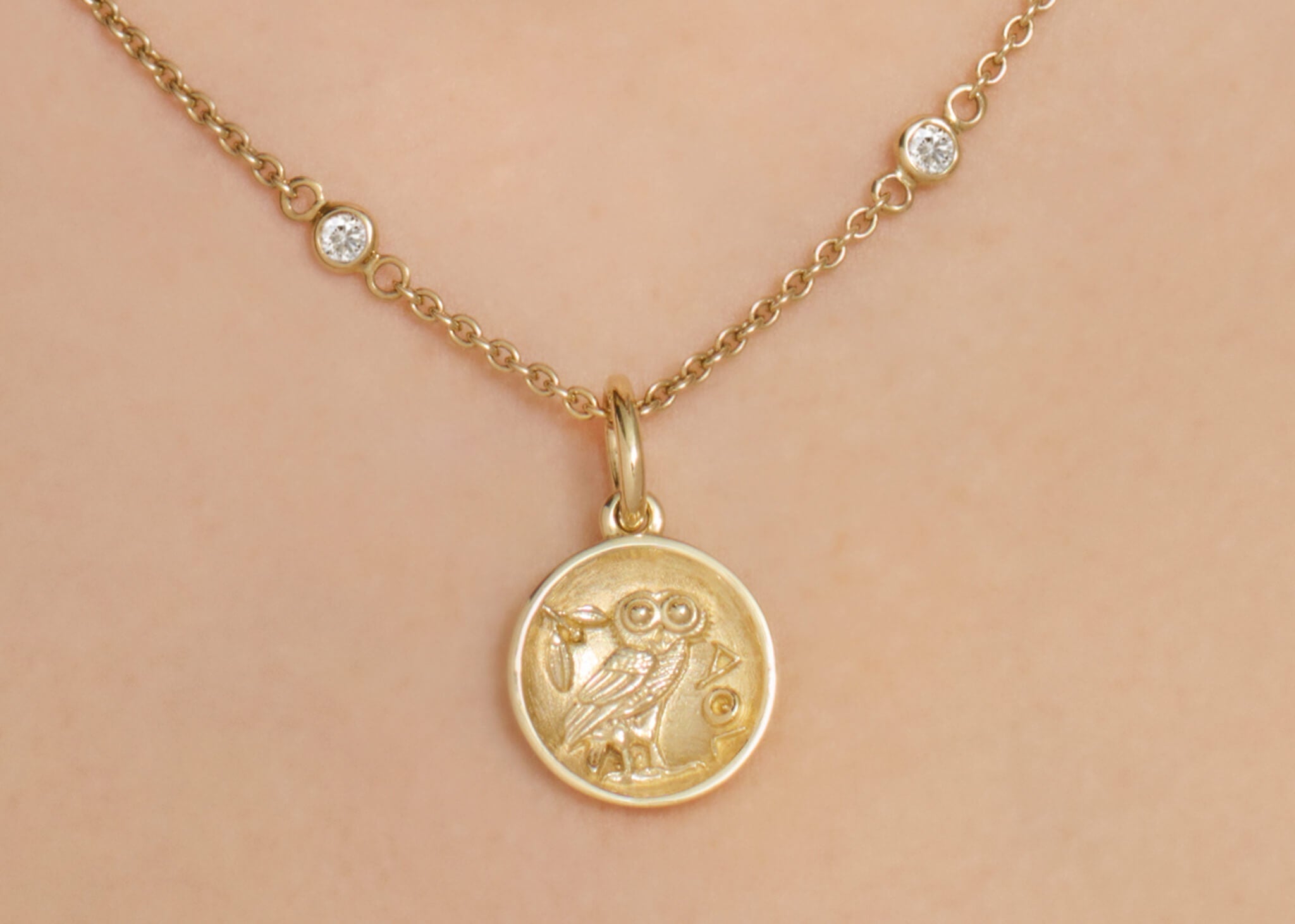
The Story Behind the Owl Medallion Charm
Inspired by the Goddess Athena’s sacred companion, Cassandra’s Owl Medallion charm embodies wisdom, strength, and clarity. A symbol for new beginnings and achievement.
Read more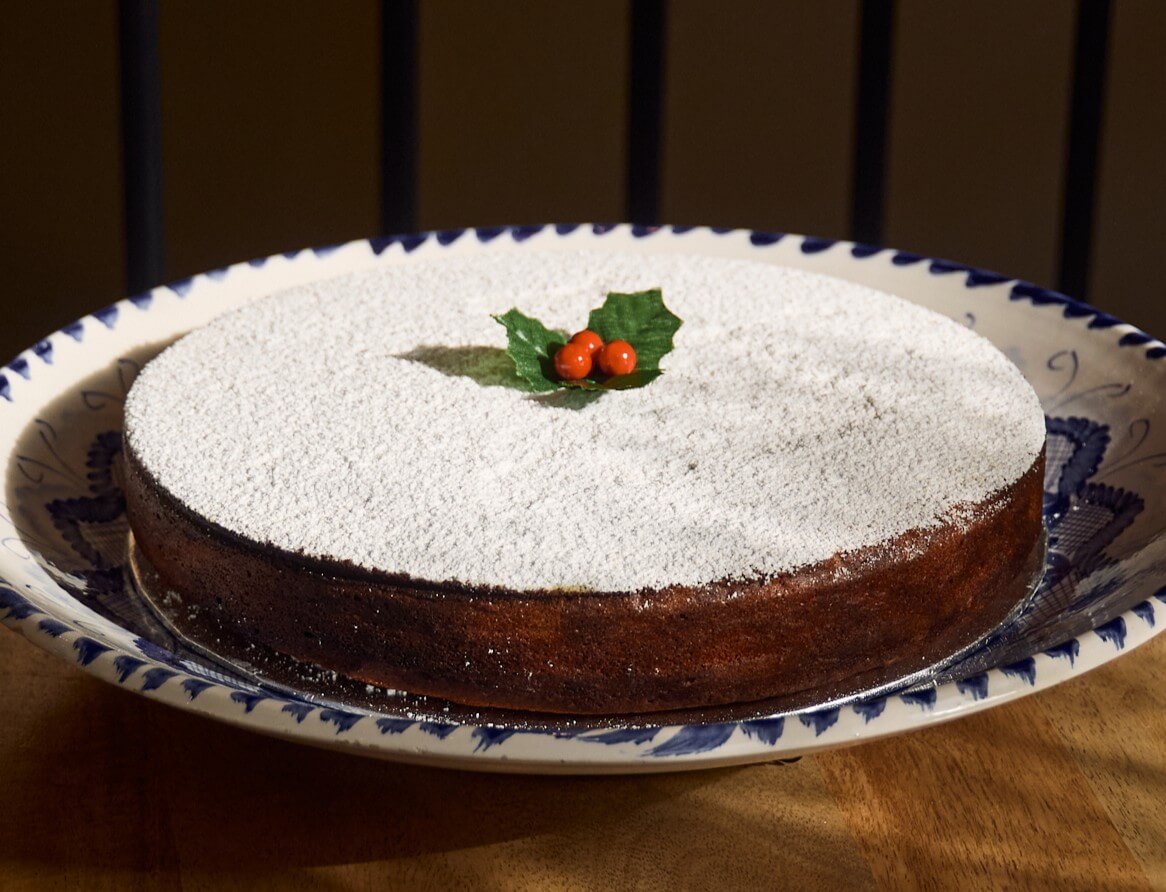
The New Year's Tradition of Vasilopita
Each New Year, Greeks celebrate with a vasilopita, a cake hiding the lucky flouri. Rooted in Saint Basil’s kindness, this cherished tradition brings family, faith and fortune together in one meanin...
Read more