








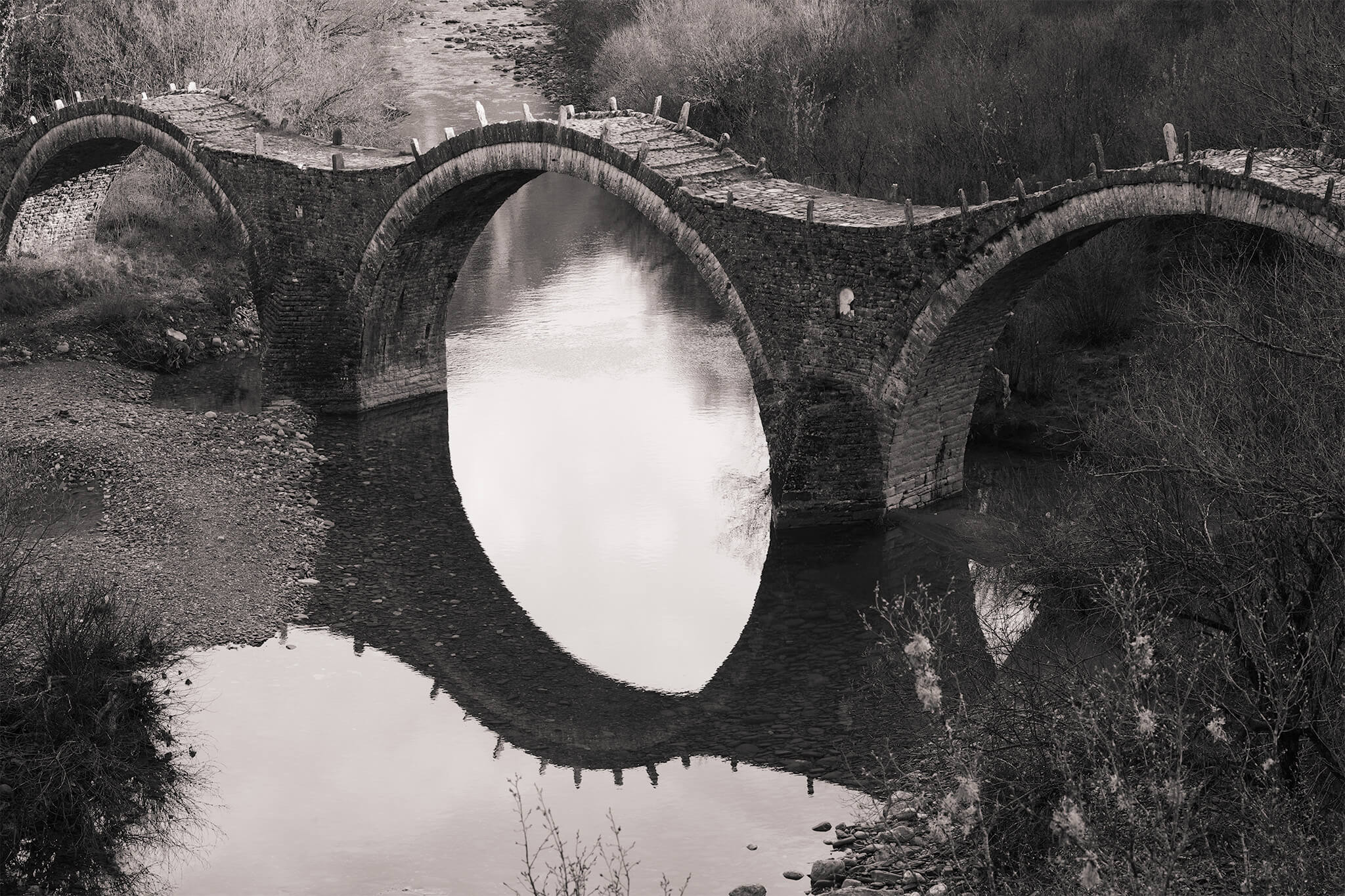
The Stone Bridges of Kipoi
Hidden within the mountains of Zagori, the village of Kipoi was once the heart of the region. Today, its legacy lives on in what surrounds it, the iconic stone bridges of Epirus. Built between the 17th and 19th centuries, they once connected isolated villages, making it possible for people, animals, and goods to move through an otherwise unforgiving landscape. Each bridge was crafted from local stone, shaped and placed by hand, with the arch at its core. This simple curve distributes weight so efficiently that many of these crossings have remained standing for hundreds of years.
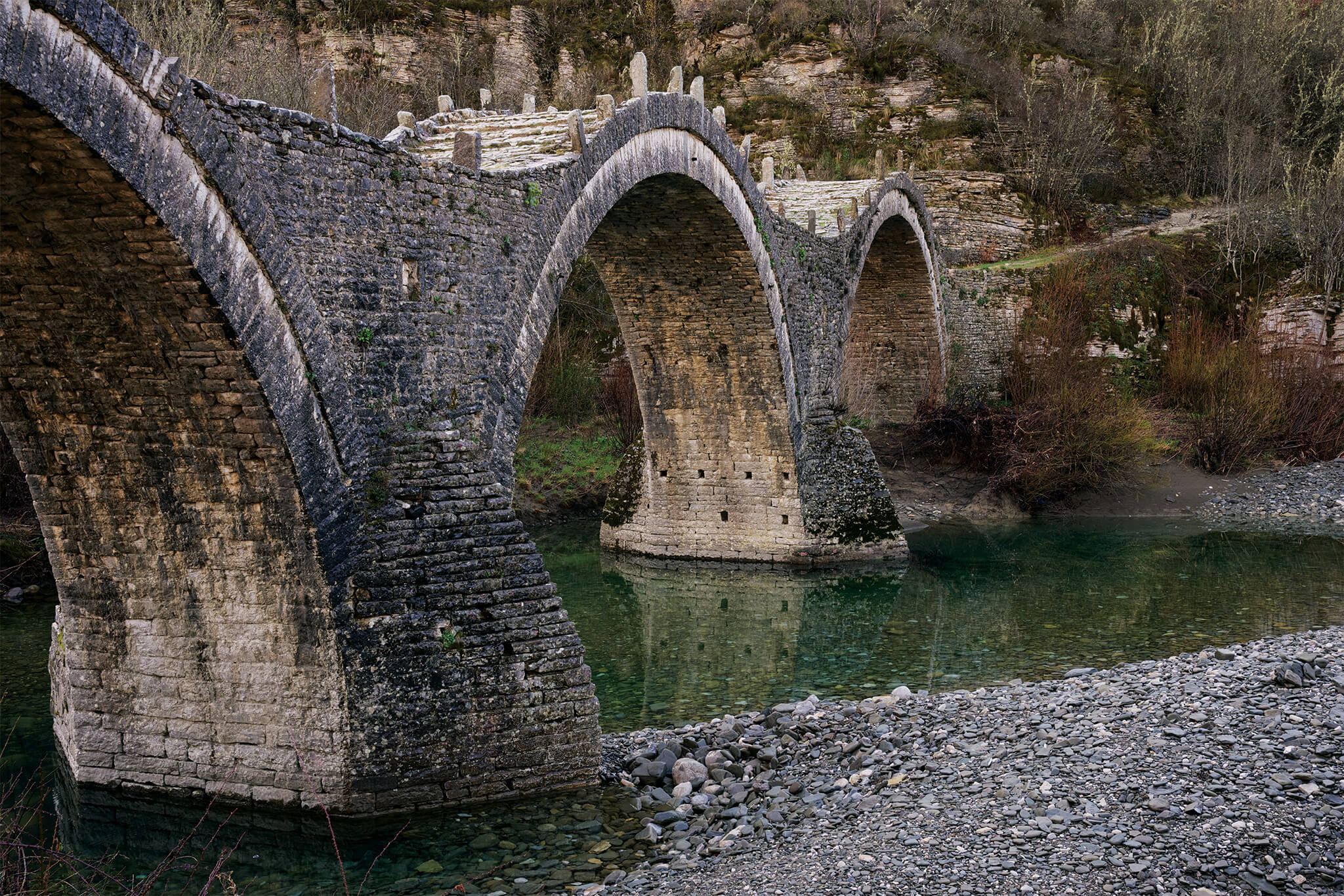
Their lasting appeal lies in their architecture. Nothing is decorative without reason, and nothing is unnecessary. The proportions feel instinctive, the structures both strong and light. The triple-arched Kalogeriko bridge is perhaps the most striking example, its sequence of arches flowing effortlessly across the river below. These bridges are the signature of Epirote craftsmanship, built by skilled artisans whose work was admired across Greece. They show how practical needs, when met with deep understanding of material and form, can result in design that remains relevant centuries later.
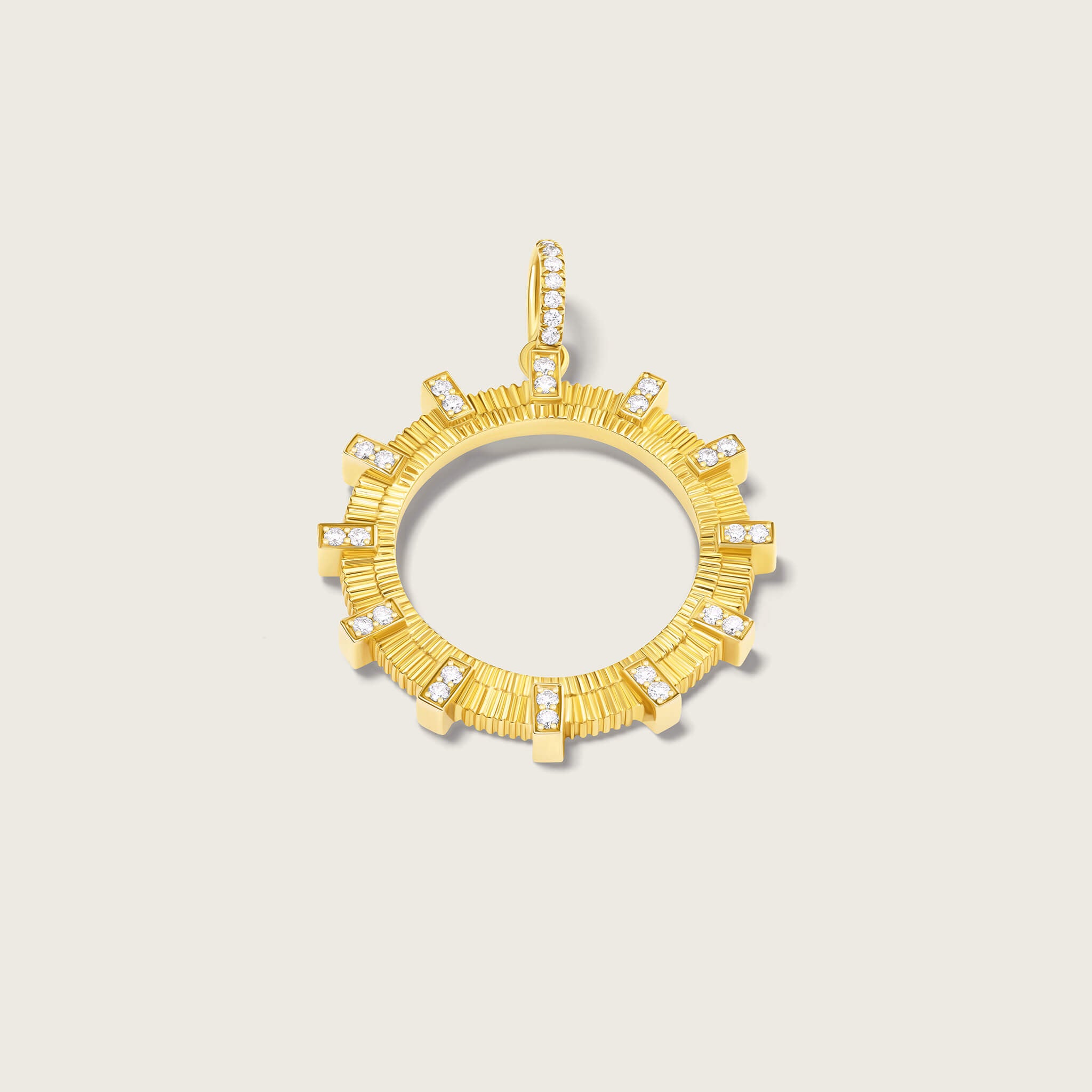
Cassandra was inspired by these quiet feats of engineering, rising unexpectedly through the mountainous landscape. She was drawn to the way their sweeping stone arches reflected in the clear water below, and to the carefully laid paths edged with upright stones that once protected mule cart wheels from slipping into the river.
The Kipoi design is her golden interpretation of these bridges, with diamonds set to echo the shimmer of light on water beneath the arches.