









Greek Christening Traditions
Greek Orthodox baptisms welcome a child into the church through a series of symbolic moments. The child is anointed with blessed oil and gently immersed in the baptismal font, representing renewal and new life, before being dressed in white and received by their godparents. Alongside the ritual itself, the ceremony is shaped by meaningful traditions passed down through generations.
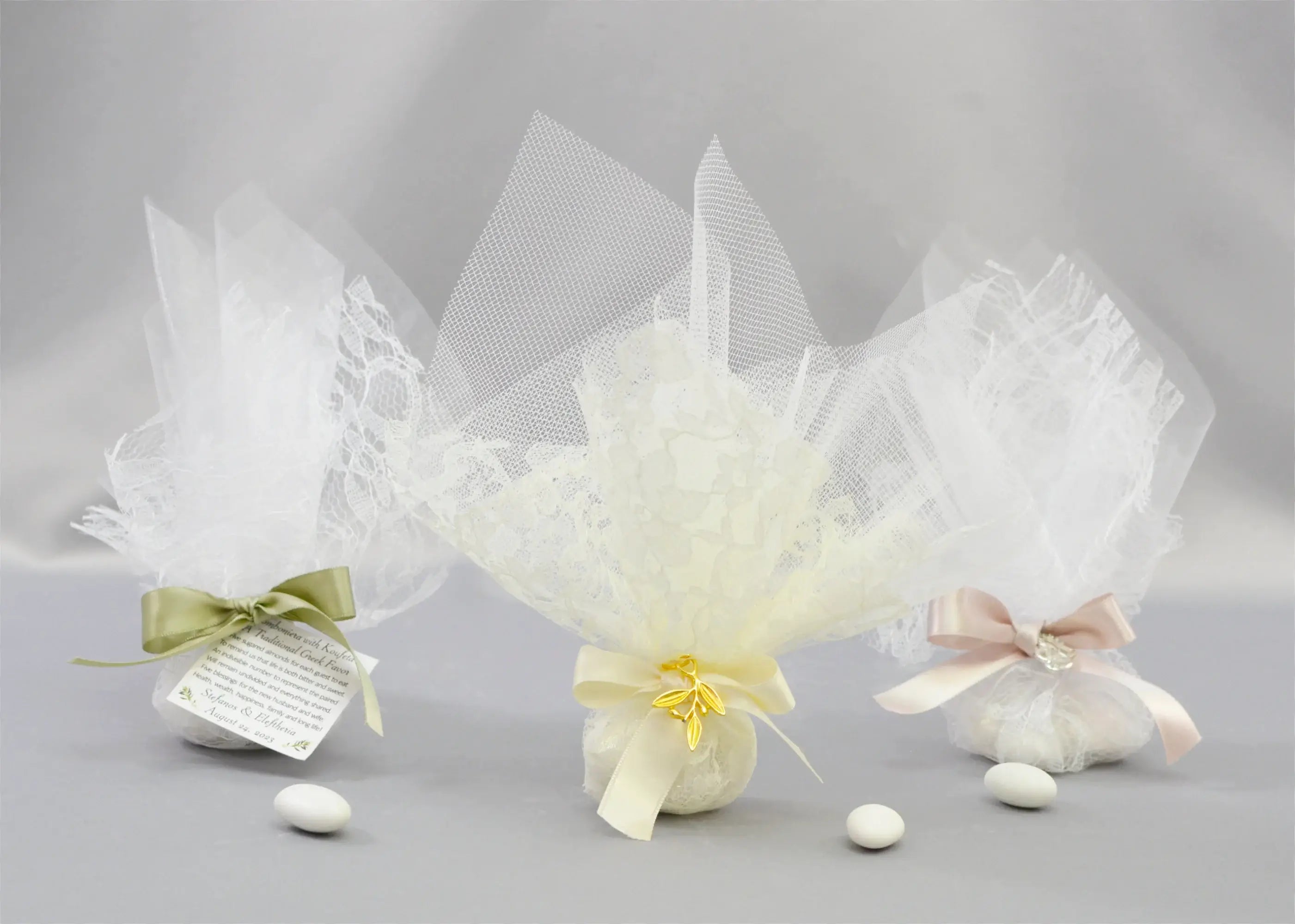
Central to the celebration are koufeta, the sugar-coated almonds given as favours to guests. Presented in odd numbers, often five, each almond carries a blessing: health, happiness, longevity, joy, and prosperity. The bitter almond represents life’s challenges, while the sweet sugar coating reflects the hope for a life filled with blessings. Koufeta are usually packaged in tulle, sometimes accompanied by a small cross or religious charm.
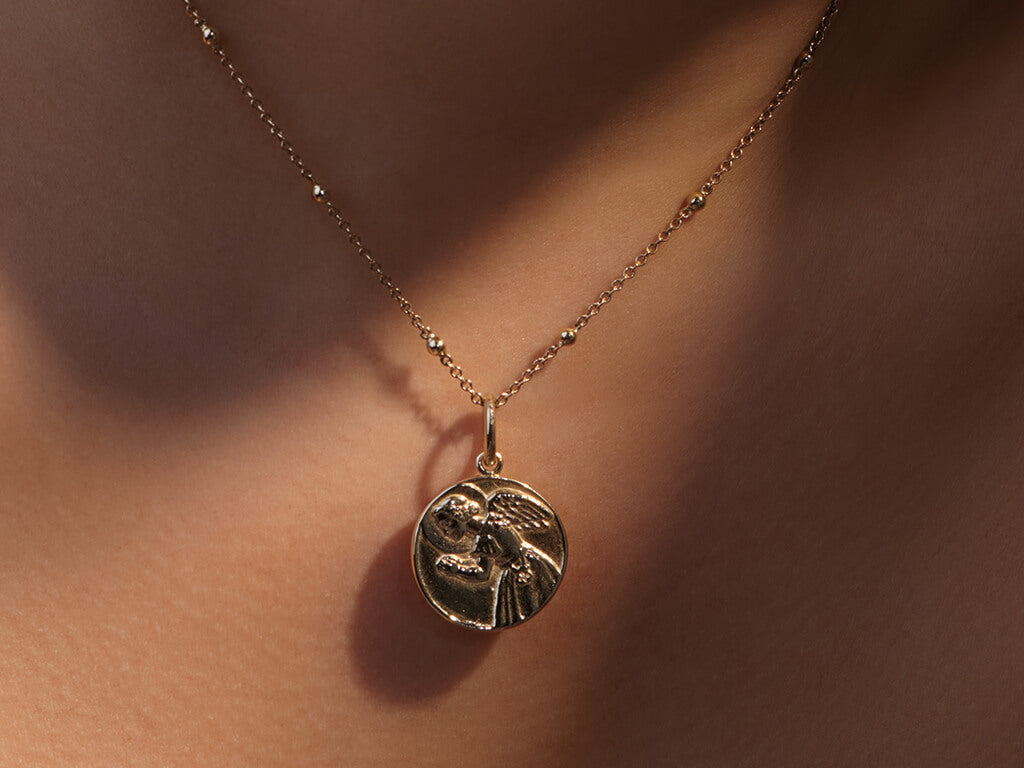
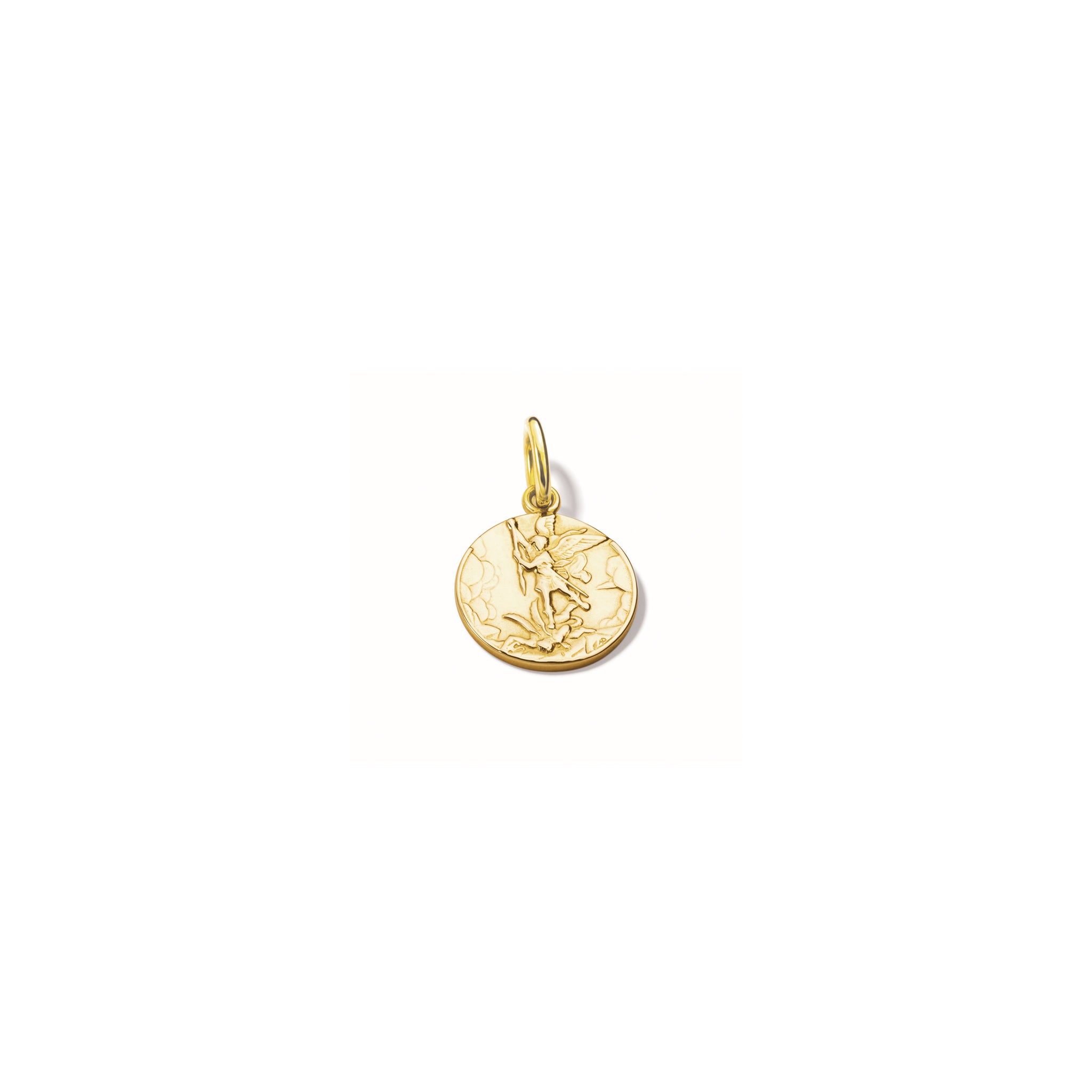
Equally meaningful are filakta, protective amulets blessed by the church. Traditionally made from silver or 9ct-14ct gold with colourful enamel, they often include sacred elements such as fragments of church vestments, olive wood, or flowers from the Holy Friday Epitaphios, and are typically kept as meaningful keepsakes into adulthood. Many feature Saints Constantine and Helena, the Virgin Mary, or angels, while others include the evil eye (mati) or the child’s initials. These are similar to Cassandra's Saint pendants, which make perfect christening gifts and meaningful charms for new beginnings.
The role of godparents (Nonos/Nona), also known as ‘spiritual parents’ in Greek, are vital to baptisms. They provide the baptismal set, including the candle, oil, clothing, and often the filakto and koufeta, and act as spiritual guides throughout the child’s life. Guests may also receive martyrika, small cross-shaped ribbons to signify their role as witnesses to the baptism.
Discover all
Saint Pendants






















Read more


The Anemone: Daughter of the Wind
Born from Greek myth and mountain breezes, Cassandra’s Anemone design captures the flower’s fleeting grace - an ode to nature and timeless beauty.
Read more