





The Dovecots of Tinos Island
Across the island of Tinos in the Cyclades, hundreds of small stone structures sit in the landscape. At first glance they can resemble miniature fortresses or abandoned watchtowers. In fact, they are dovecotes, built over several centuries to house pigeons and form one of the island’s most distinctive architectural traditions.
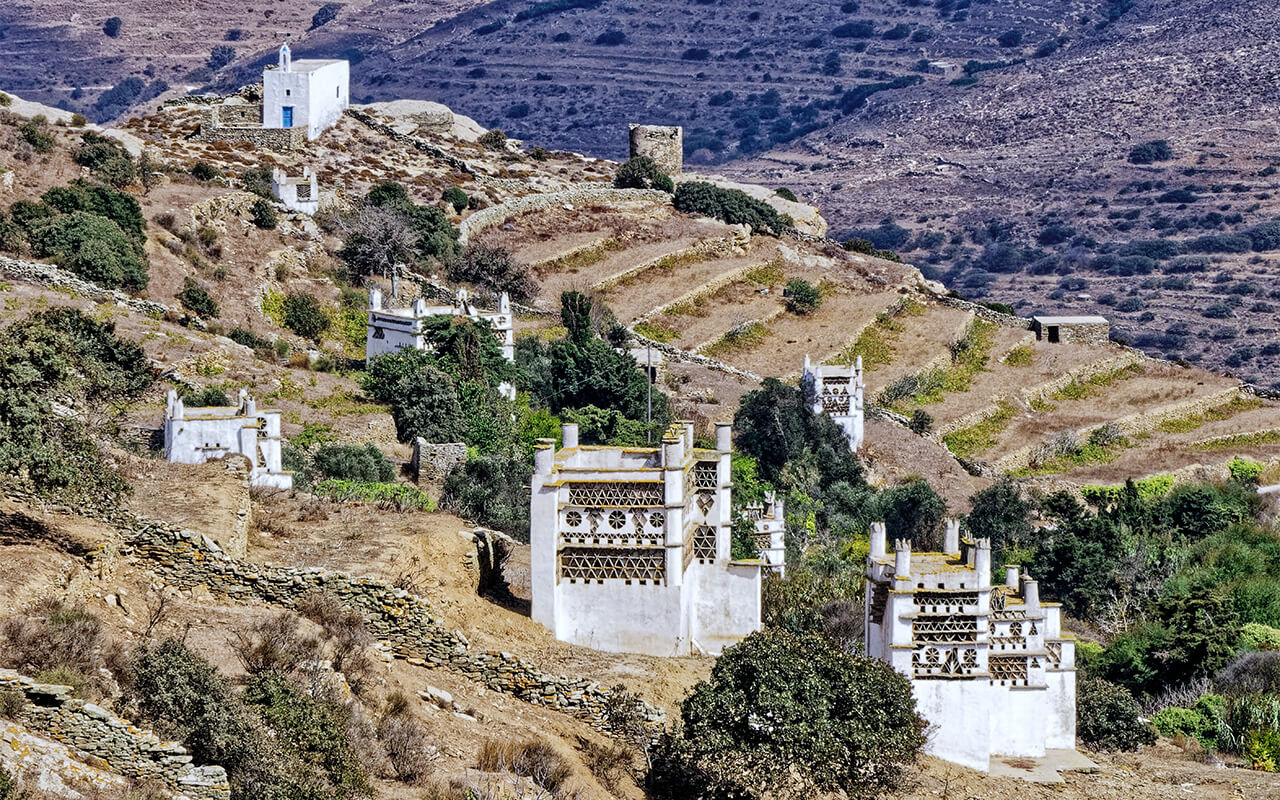
Photo by Holger Uwe Schmitt.
Their presence is tied closely to the island’s landscape and economy. Tinos is exposed to strong seasonal winds, and its terrain is largely rocky and terraced. It’s even claimed that Tinos was the birthplace of Aeolus, the god of wind. In this setting, pigeons were easy to raise and highly valuable. They provided meat and, more importantly, droppings that were used as fertiliser for crops. Over time, what began as a practical form of livestock farming developed into a widespread building tradition, especially from the 18th and 19th centuries onwards.
Most dovecotes are typically two-storey buildings made from local stone, with the upper level designed for the birds and the lower level used for storage. Openings are carefully positioned to face away from the strongest northern winds, allowing pigeons to enter and leave more easily. Small ledges and protruding slate pieces create landing points along the facades, extending the usable surface of the building.
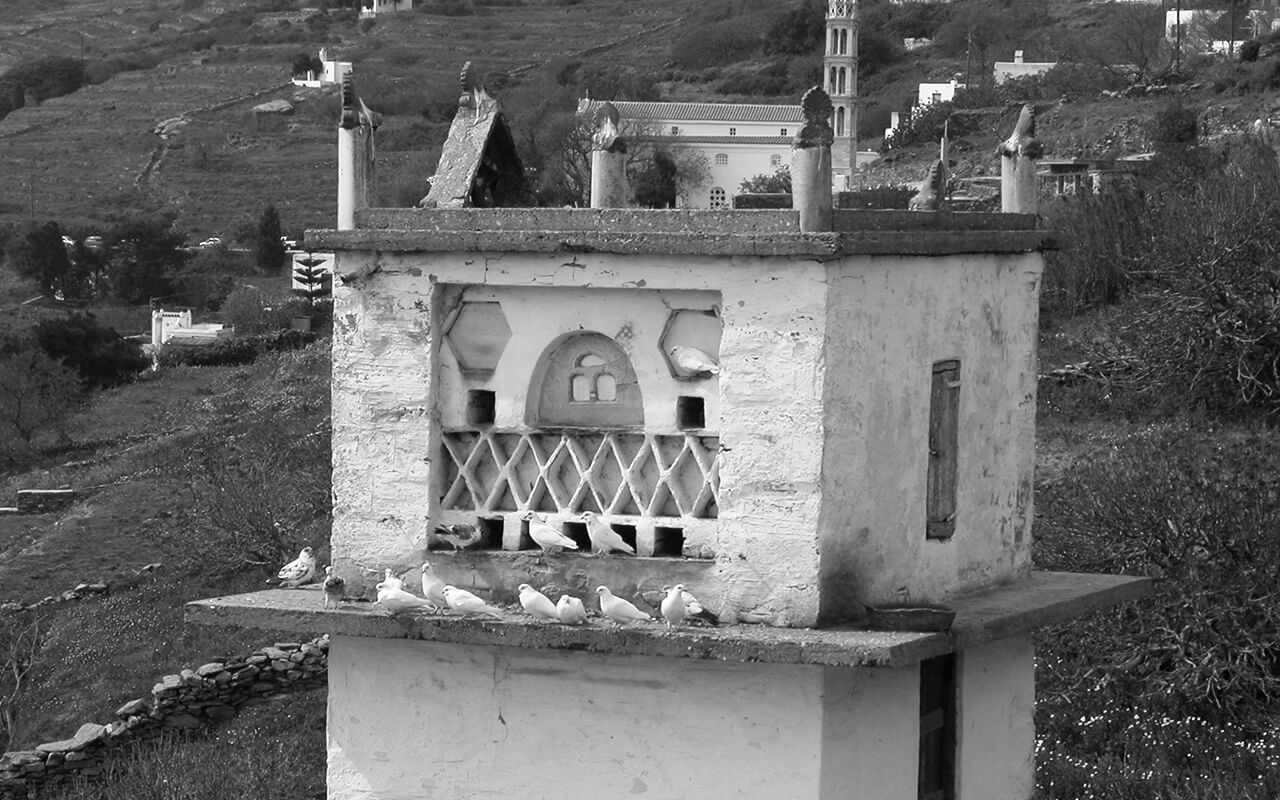
Photo by Stepanps.
What makes the dovecotes of Tinos visually distinctive is their surface decoration. Local craftsmen used slate to form geometric patterns across the exterior walls. Triangles, circles, diamonds and grid-like arrangements appear repeatedly, but rarely in identical combinations. These motifs are not purely decorative in the modern sense; they are integrated into the structure, shaping openings and nesting spaces at the same time. Each building ends up slightly different, depending on the builder, the owner, and the available stone.
Scattered across valleys and hillsides, they create a subtle pattern across the island’s interior rather than clustering in settlements. Some are still standing in good condition, while others are partially collapsed or being gradually absorbed back into the rocky terrain. Although pigeons are no longer widely kept in them, the structures remain part of Tinos’ visual identity.
Read more

An Interview with the Head of Tourism of the Embassy of Greece
Eleni Skarveli shares her Greek summer favourites, from islands and mainland escapes to London spots, celebrating food, culture, hospitality and heritage.
Read more