






In Conversation with Diptyque
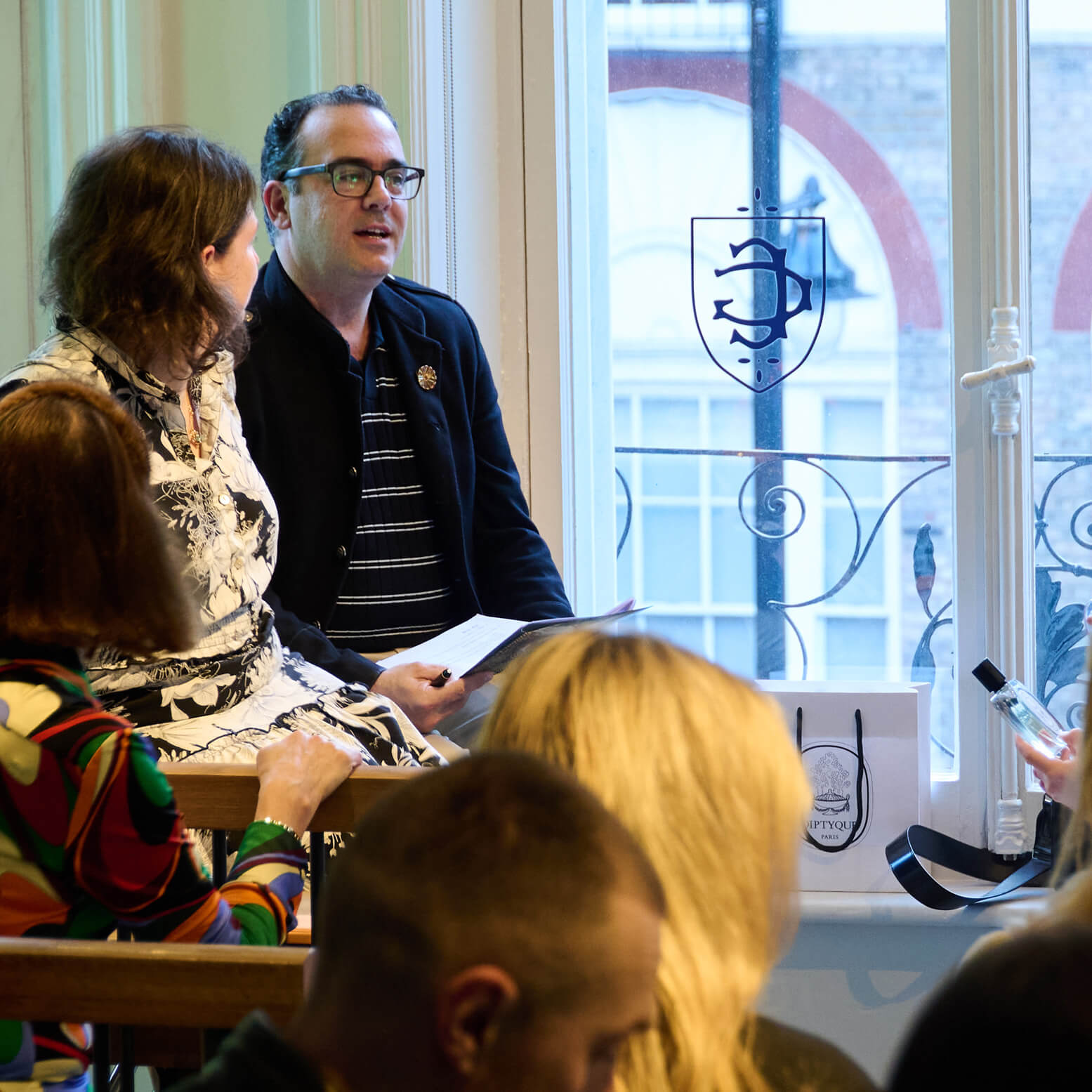
On a warm spring evening, Dr. Antony Makrinos and Claire Makrinos joined Cassandra at our Sloane Street boutique for a conversation that moved between Greece, myth and fragrance. Claire, who has worked with Diptyque for many years, brought an intimate understanding of the house and each scent, while Antony, an associate professor at University College London specialising in Homer, added depth through his knowledge of Greek mythology. Together, the evening unfolded through fragrance, alongside Cassandra’s world of jewels.
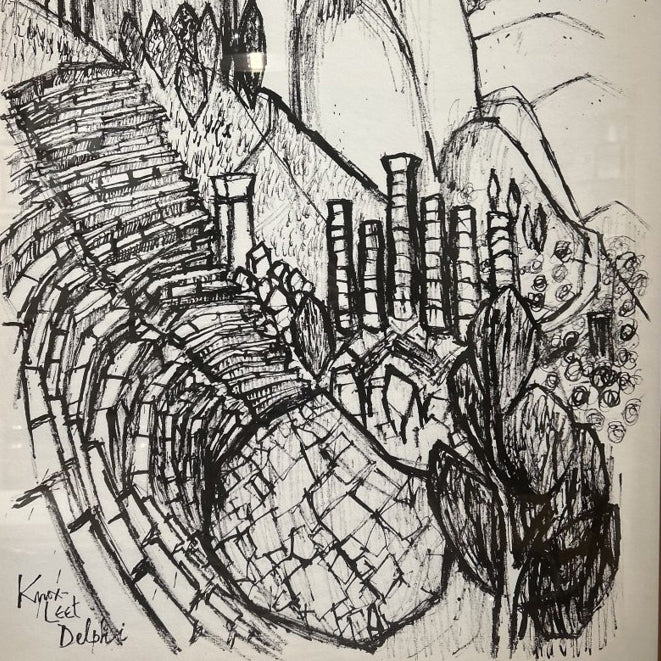
Delphi, drawing by
Desmond Knox-Leet, 1961
Cassandra’s Delphi ring, inspired by the Doric columns of the Temple of Apollo, offered an architectural reference. The site also held particular significance for Diptyque’s founder Desmond Knox-Leet, whose sketches reflect a lasting interest in the same landscape. From here, the evening moved into scent, with each fragrance anchored in a specific myth.
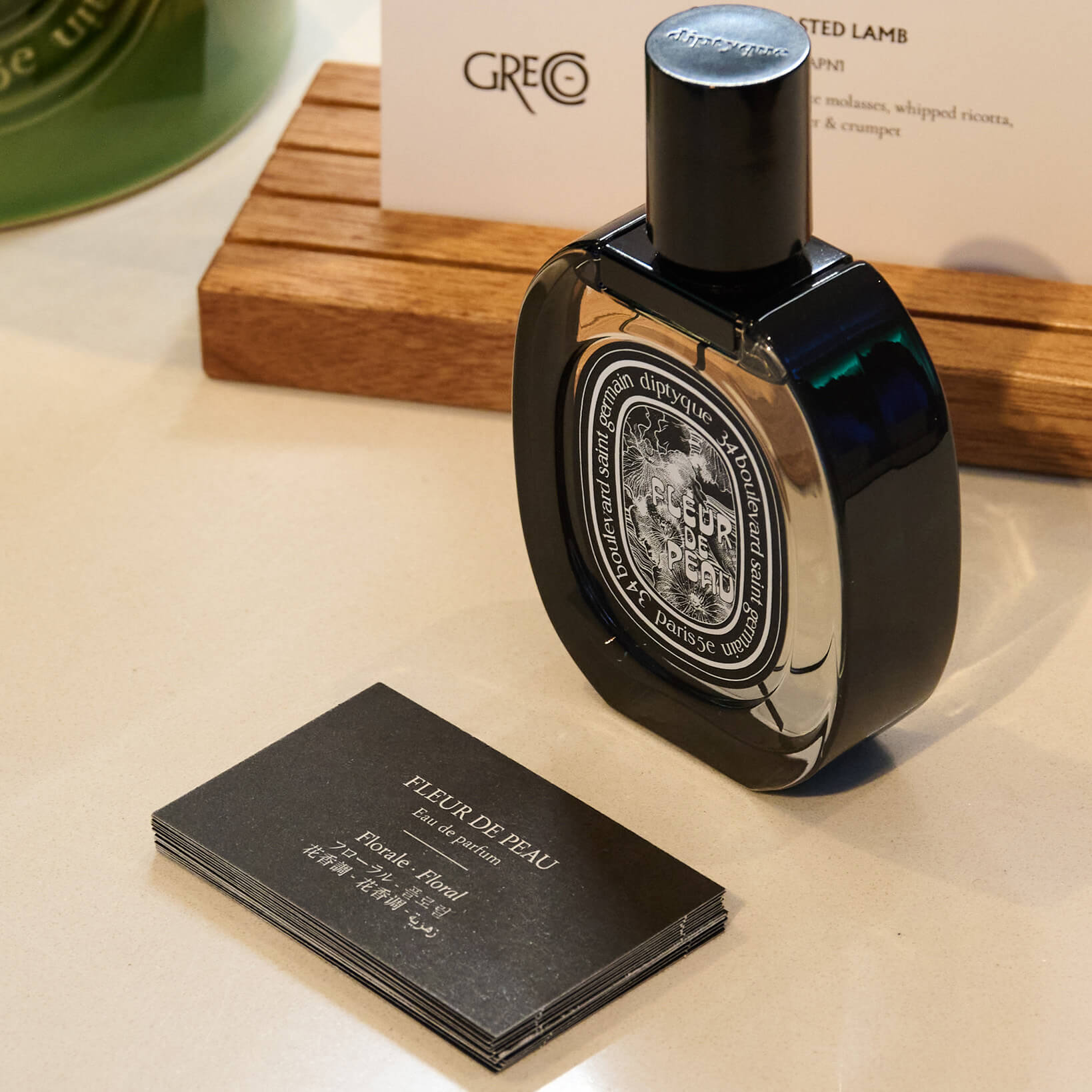
Fleur de Peau (Eau de parfum)
Musk, Iris, Ambrette, Pink peppercorn
Fleur de Peau is inspired by the myth of Eros (cupid) and Psyche. Psyche is a mortal woman whose beauty draws widespread admiration, to the point that Aphrodite becomes envious. She sends her son Eros to punish Psyche, but Eros instead falls in love with her. The story ends with Psyche becoming immortal, and their union gives rise to Hedone, the goddess of pleasure.
The fragrance focuses on musk, which is used here to represent skin and closeness. Iris adds a powdery floral element, ambrette brings a soft seed-like warmth, and pink peppercorn introduces a light spiciness. Together they reflect the idea of connection and intimacy that runs through the myth.

Eau de Minthé (Eau de parfum)
Patchouli, Geranium, Mint, Rose Oxide
This fragrance refers to the myth of Minthe, a river nymph associated with the underworld. According to myth, Minthe becomes involved with Hades, which provokes the jealousy of Persephone. As a result, Minthe is transformed into the mint plant. The myth explains the plant’s strong presence and its association with both freshness and bitterness.
The composition uses mint as its central note. Geranium sits alongside it to add a green floral quality, while patchouli gives depth. Rose oxide brings a subtle lift.
Here, Cassandra delved into her Persephone design, explaining how the beaded gemstones found on both the rings and bangles reflect the pomegranate eaten by Persephone, drawing a connection between myth and design.
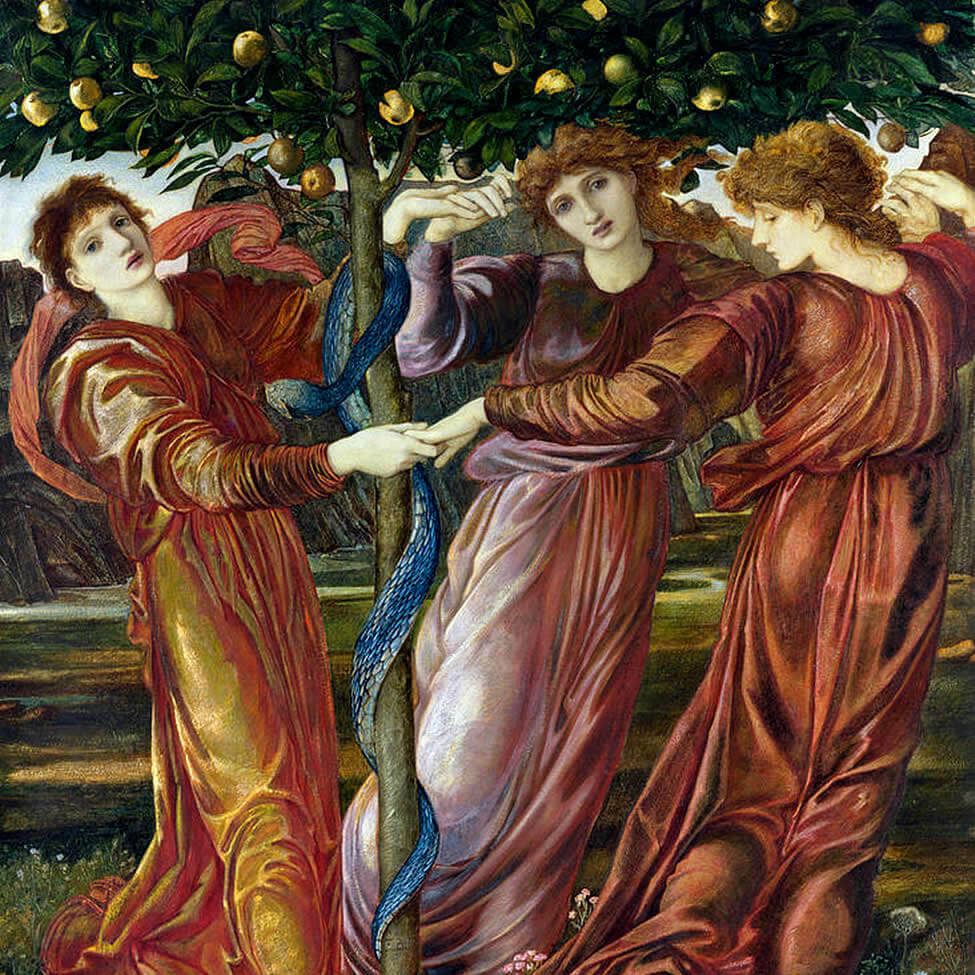
L’Eau des Hespérides (Eau de toilette)
Bitter orange, Lemon, Peppermint, Immortelle
In Greek mythology, the Hesperides are nymphs who guard a garden containing golden apples, often interpreted as citrus fruits. These apples are associated with immortality and are protected as sacred objects. The garden itself is placed at the edge of the known world, marking a boundary between the familiar and the mythical.
The fragrance is built around citrus notes, particularly bitter orange and lemon, which reference the fruit in the myth. Peppermint adds lift, while immortelle introduces a dry herbal tone. The composition reflects the idea of guardianship and abundance.
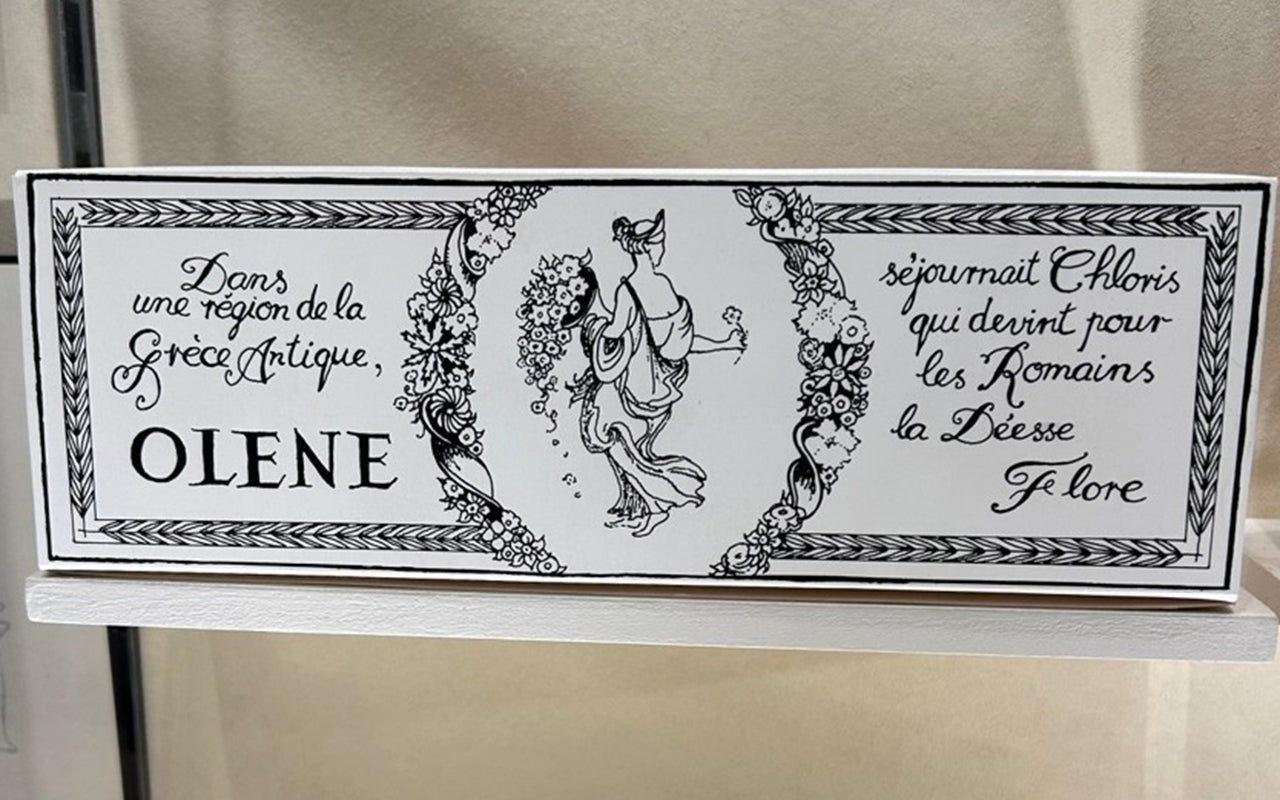
Olène (Eau de toilette)
Wisteria, Honeysuckle, Jasmine, Narcissus
Olène draws on the idea of ancient gardens and is associated with Chloris, the Greek goddess of flowers and spring, a figure closely tied to growth and seasonal change. She is often depicted surrounded by flowering plants, embodying the moment when nature comes into bloom.
According to Ovid, she was abducted by Zephyrus, the god of the west wind and following their marriage, she was transformed into the goddess Flora. Chloris was also believed to preside over floral metamorphoses, transforming figures such as Adonis, Attis, Crocus, Hyacinthus and Narcissus into flowers, a detail that quietly informs the inclusion of narcissus within the scent.
The fragrance centres on white florals, including jasmine, narcissus, wisteria and honeysuckle.

Summer School in Homer
Each summer, Dr. Antony Makrinos leads the Summer School in Homer at UCL, now in its thirteenth year, bringing together students for five days of focused study in the language, literature and wider world of Homer. Running from 27-31 July 2026, the programme offers an immersive yet welcoming environment, with small-group teaching tailored to different levels, from beginners to advanced, alongside lectures and specialist sessions exploring themes from philosophy to religion. Both rigorous and rewarding, it is designed to deepen understanding while capturing the richness and enduring resonance of the Homeric tradition.
Read more
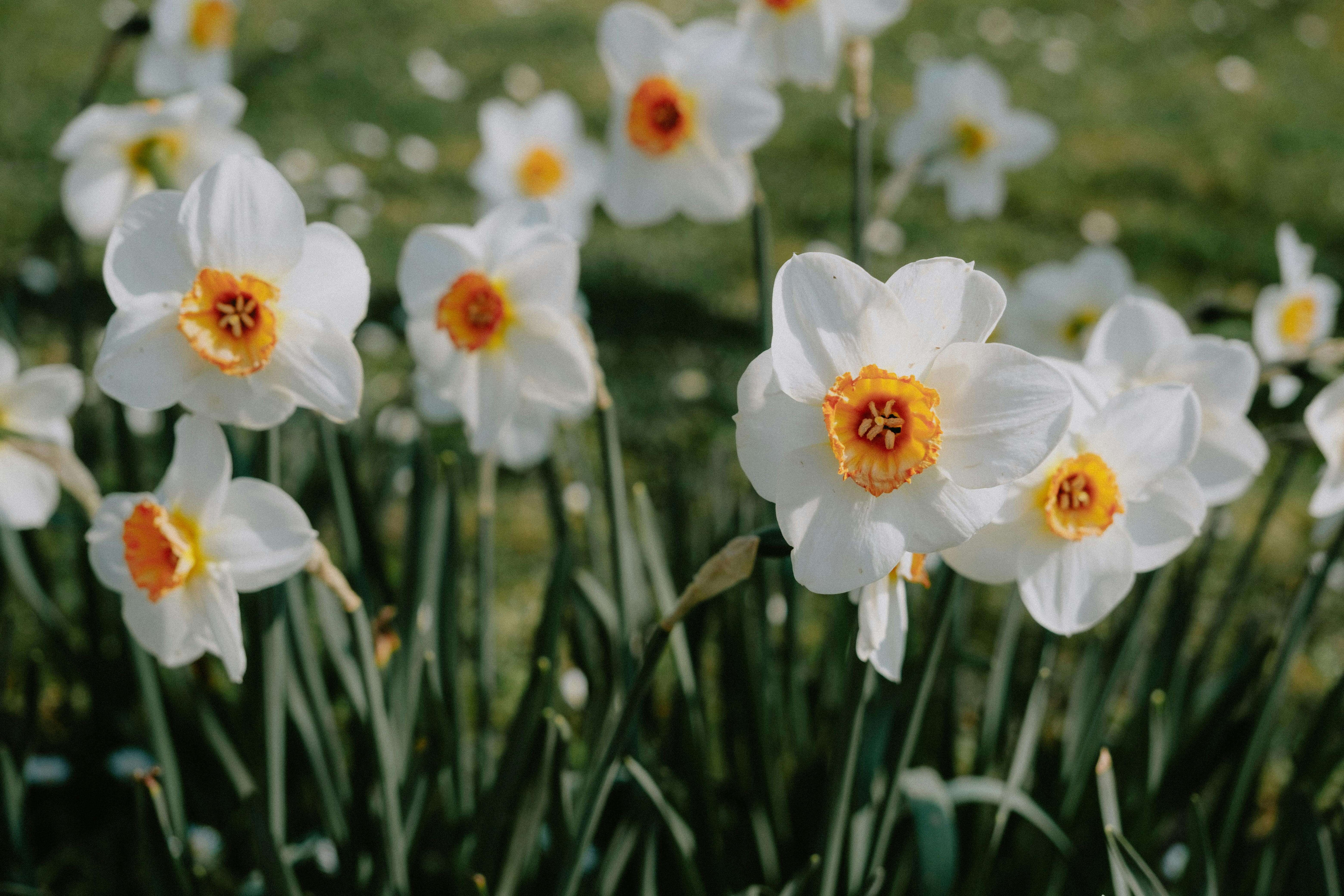
Understanding Nature Through Myths
On a wander through parks, countryside paths, or even a quiet tree-lined street, it is easy to start wondering why nature behaves the way it does, why one flower returns every year without fail, or...
Read more
Your Wishlist: Save What Speaks to You
Think of your Cassandra Goad wishlist as a little space just for you. A place to save the jewels that make you pause, the ones you keep thinking about long after you have closed the page.
Read more