




In Conversation with Fran May
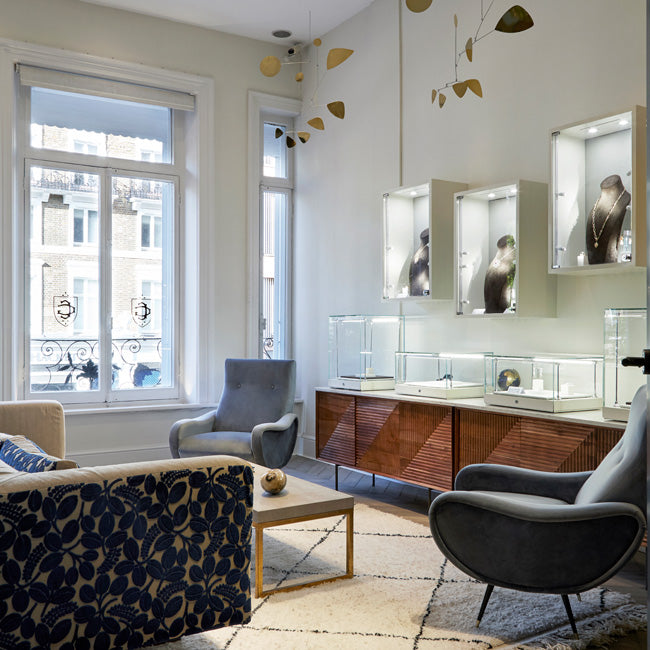
On Greek Independence Day, Fran May arrived at our Sloane Street boutique wearing a set of jewellery that quietly set the tone for the evening. The earrings and necklace she wore once belonged to her ancestor, Sir Richard Church, an Anglo-Irish military officer who served as commander-in-chief of the Greek land forces during the final stages of the Greek War of Independence. He had gifted the set to his wife: 18ct gold with amethyst and turquoise.
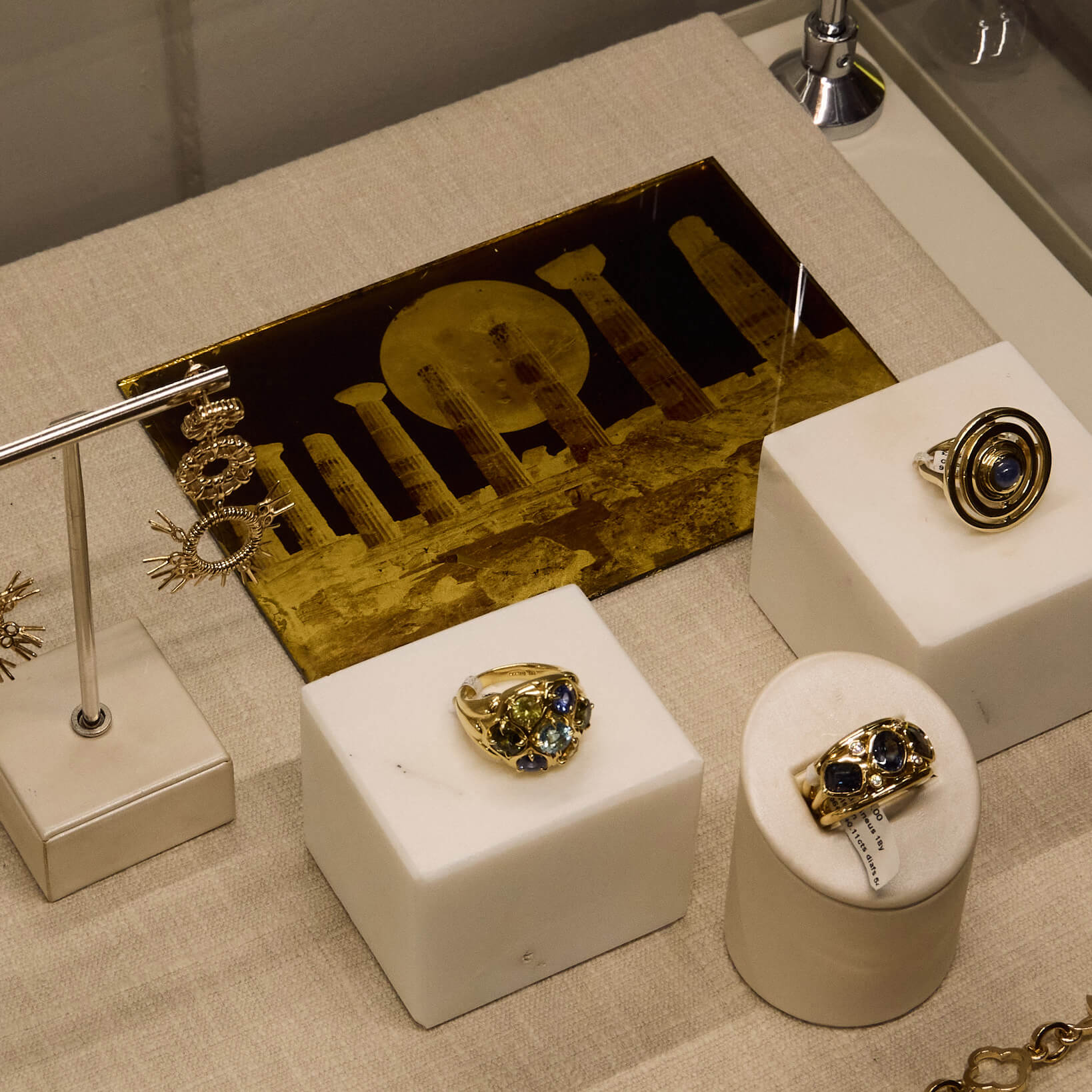
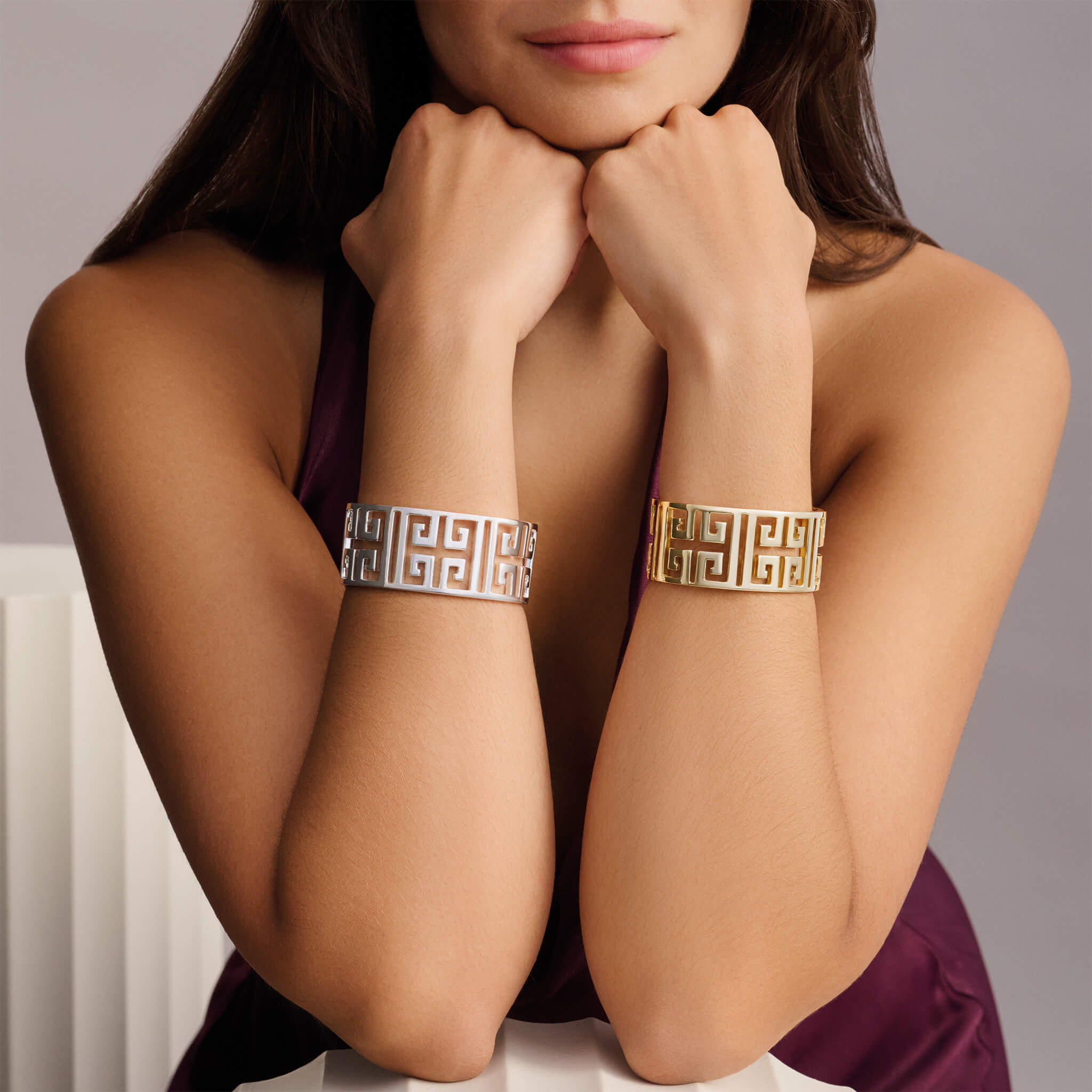
What followed was a conversation shaped by shared references, particularly Greece and its architecture, but expressed in different ways. Cassandra draws from travel and observation, from the stone bridges of Zagori, to the Meteora monasteries and the amphitheatre at Epidaurus. These moments are translated into design: the arc of a bridge becomes a pendant, the structure of an amphitheatre informs composition, while details such as the red cord embroidery of Northern Greece appear in jewels like her Nima design.

Fran approaches the same material through photography. Her work begins with Greek temple architecture, from sites in Sicily and Southern Italy to Athens, where she photographed the Acropolis and Parthenon. She connects these structures to their original meanings, layering in references to the cosmos, with figures such as Zeus and Athena set against planetary and galactic imagery.

Fran’s interest in architecture led her to think more broadly about origins. For her, gold is not just decorative but elemental, formed in stars and carried to earth long before it was shaped by human hands. Although her images are shot digitally, they are printed using early photographic processes from the 1840s, across orotones on glass, carbon prints on glass, and carbon prints on gold leaf paper.

Each process is slow and precise. Glass plates are coated by hand, often using an egg white and honey solution, then sensitised with silver nitrate under coloured light. A digital negative is created and carefully adjusted so tones print correctly. The image is exposed using ultraviolet light, before being developed through a series of chemical baths. In the orotone process, a gold chloride bath transforms the silver into gold, before the final image is water gilded with sheets of 24ct gold leaf. For her larger works, she applies gold leaf to paper first, then transfers the image using layers of gelatine and pigment, building up a surface that has depth and permanence.
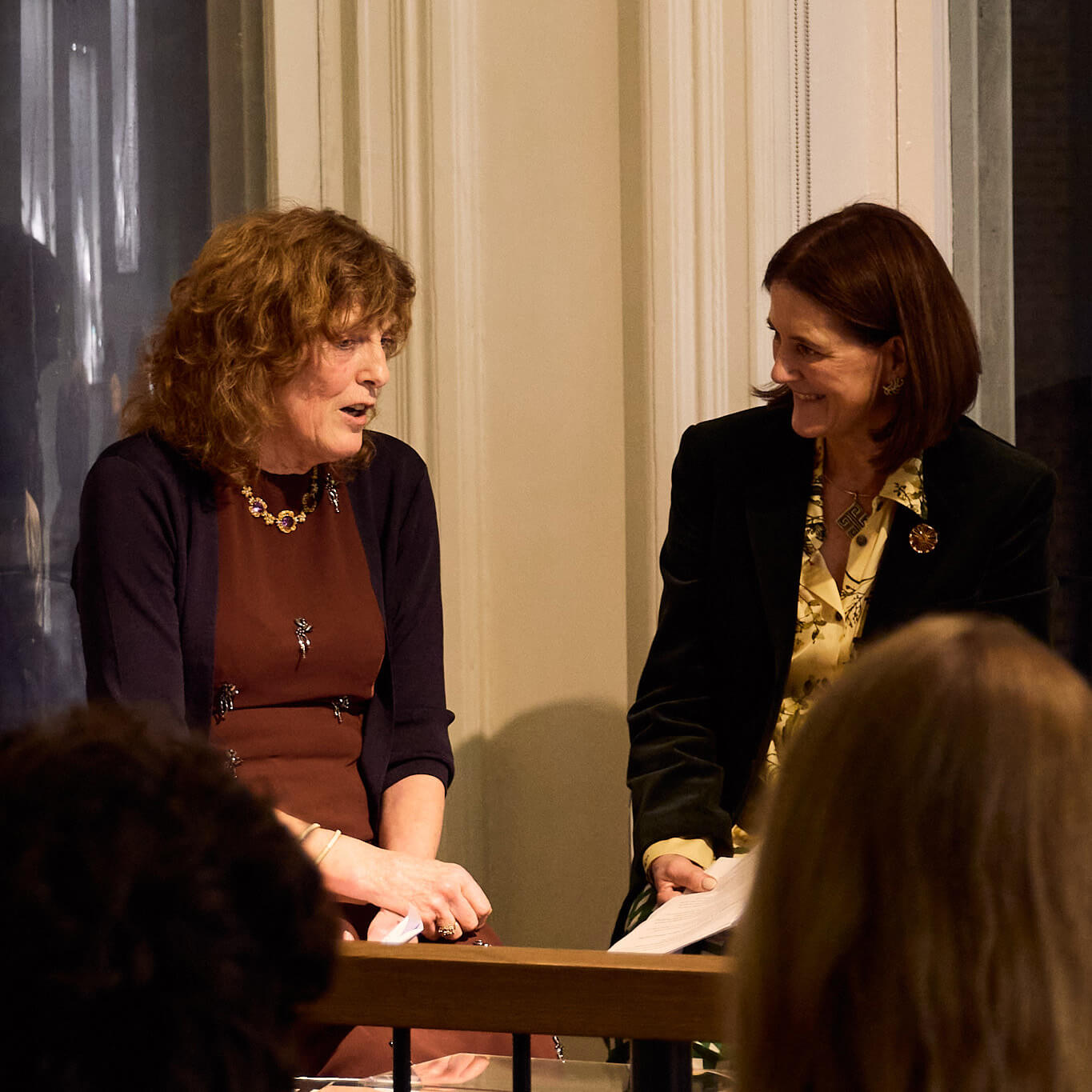
Across the evening, a clear overlap emerged between Fran and Cassandra, both returning to the same references of Greece, architecture and gold, but working with them in different ways. Where Fran builds these ideas into image, Cassandra translates them into form.
Read more
Onwards: An Interview with Max Worsley
In this interview, Cassandra speaks with Max Worsley, a British explorer continuing a powerful legacy as he prepares for an unsupported ski journey across Antarctica in honour of Shackleton and his...
Read more
Cassandra's Guide to London in the Summer 2026
What to do, what to see and where to eat this summer in London.
Read more