



Tassies: A Study in Stone
Did you know that some of the most convincing ancient gems ever seen were actually made in the eighteenth century?
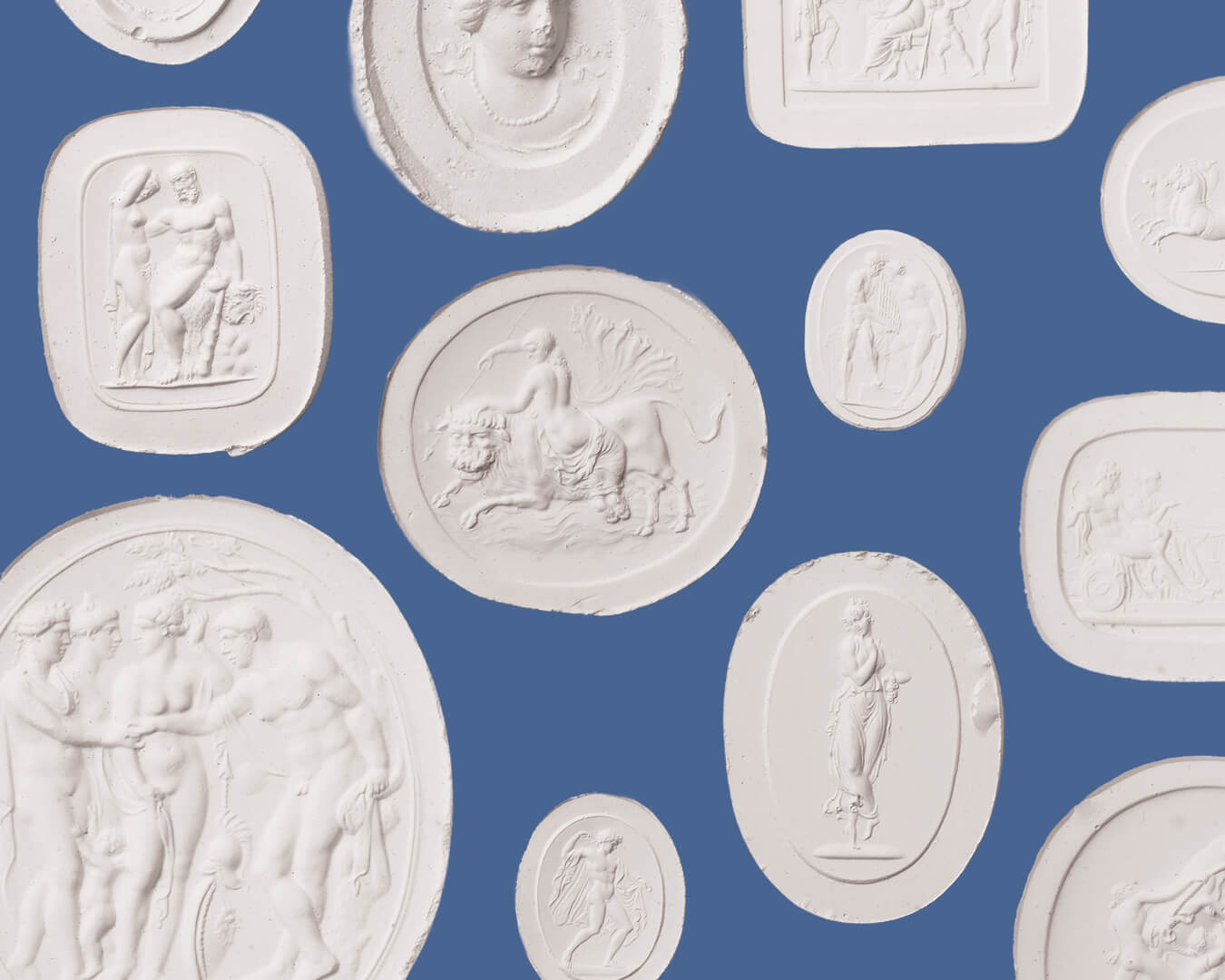
Tassies are miniature impressions of engraved intaglios and cameos, named after the Scottish gem engraver James Tassie, who popularised them in the late 1700s. Traditionally made in glass paste, they were also produced in plaster, allowing collectors and scholars to study celebrated ancient carvings in extraordinary detail without needing to own the originals.
The engraved gems that inspired them date back to Ancient Greece and Rome, where they served as signatures, seals and symbols of status. Greek intaglios often featured gods, heroes and mythical creatures, and some were believed to act as protective amulets. As Tassie’s reputation grew, the finest collections across Europe opened their cabinets to him, allowing him to reproduce thousands of remarkable pieces. One of his most illustrious patrons was Catherine the Great, who commissioned around 15,000 examples for her own collection.
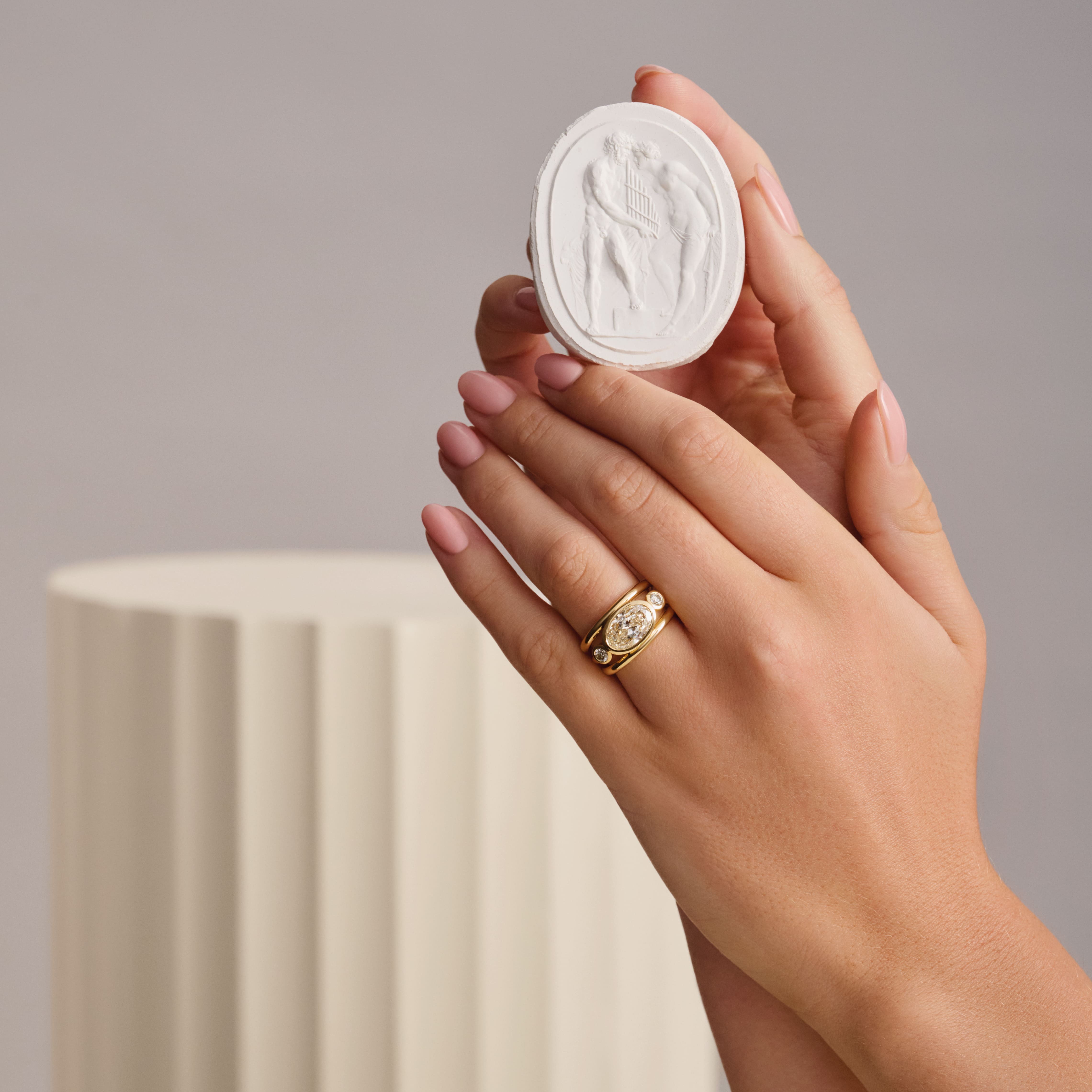
Such was the quality of Tassie’s work that some copies were even mistaken for the ancient originals themselves, a testament to the remarkable skill behind these tiny works of art.
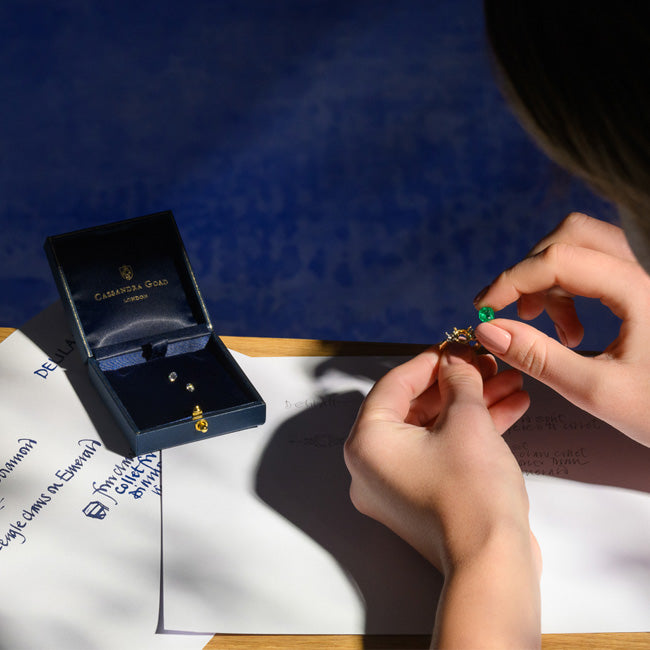
This historical tradition finds a contemporary echo in Cassandra’s own collection of plaster tassies. Begun by her Scottish craftsman, who had spent decades handcrafting her signet rings, the collection reflects a shared fascination with classical references and the enduring language of engraved stone.
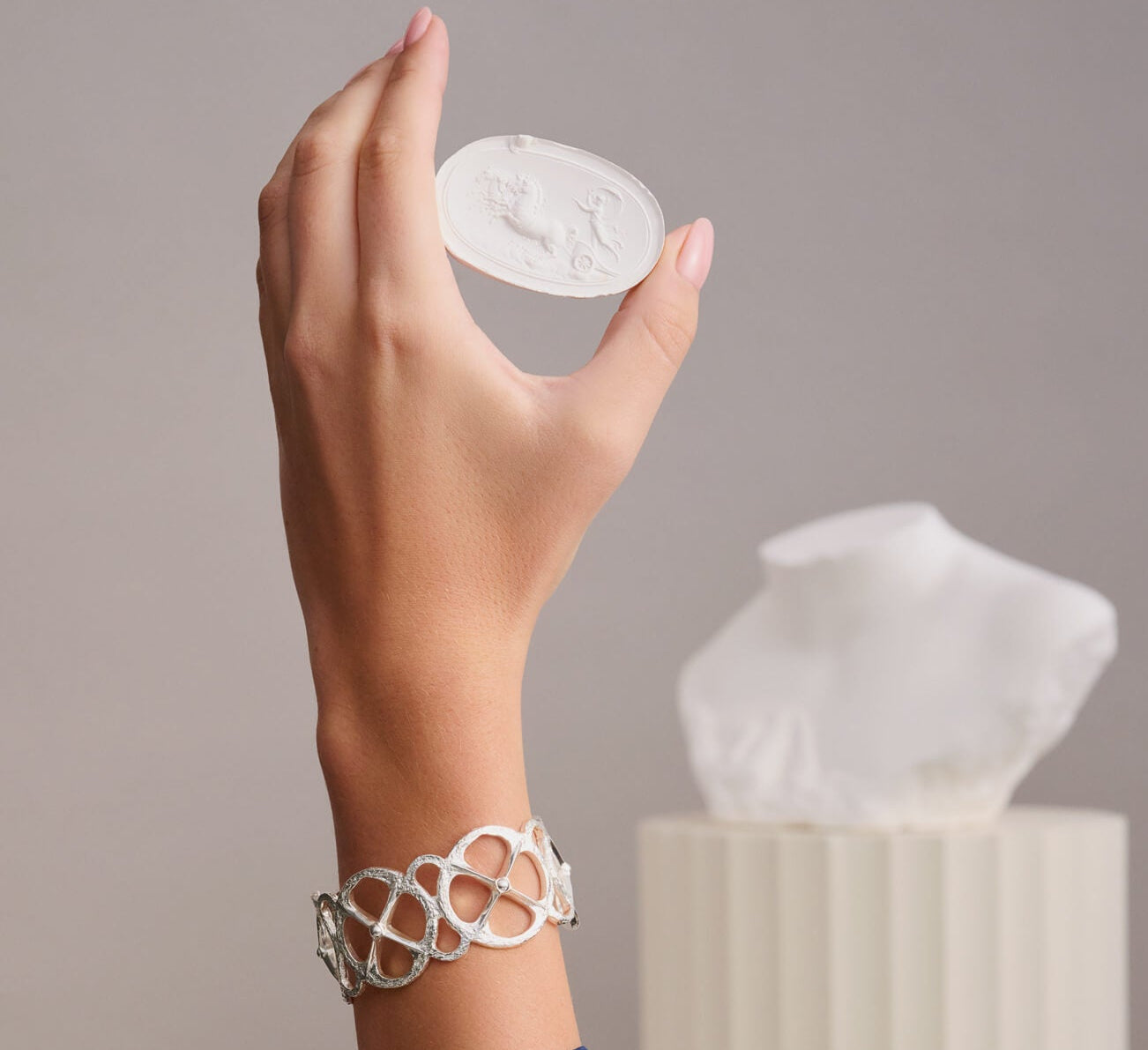
Drawing directly from historic intaglio gemstones, these plaster casts continue the Tassie tradition of studying and preserving form through replication. A selection of tassies from Cassandra’s collection will be displayed in our Sloane Street boutique throughout September as part of her Greco collection focusing on Greek sculpture and myths.
Read more

The Return of the Bayeux Tapestry
The Bayeux Tapestry is finally returning to England. Nearly 1,000 years after the Norman Conquest, this extraordinary medieval masterpiece will be exhibited at the British Museum from September 202...
Read more
Cassandra's Guide to London in Autumn 2026
What to do, what to see and where to eat this autumn in London.
Read more