






The Lifting of the Veil
If you have ever attended a wedding and watched the groom gently lift the bride’s veil, you might have wondered where this ritual began. And you may be surprised to learn that its roots reach back to Ancient Greece, to the sacred marriage of Zeus and Hera - the divine prototype for the following generations.
In Ancient Greek tradition, Anakalypteria, literally meaning ‘the unveiling’, marked one of the most significant moments in a wedding ceremony. The removal of the bride’s veil symbolised the conclusion of the rites and the beginning of her new life as wife. This gesture was both intimate and ceremonial: the bride, previously hidden, was now revealed to her husband as the union was blessed and celebrated.
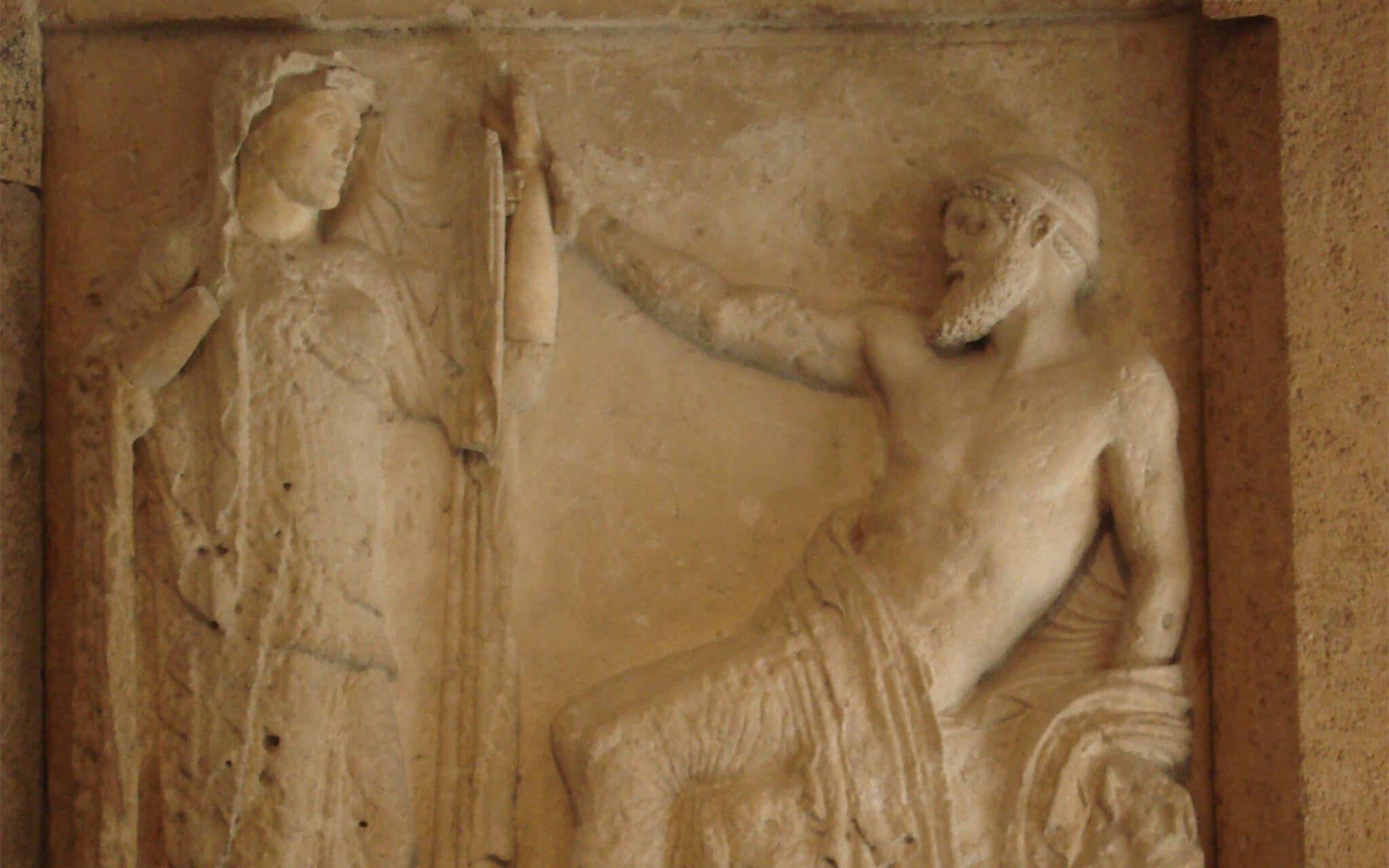
A stone relief from 400-500 BC, discovered in the Temple of Hera in Palermo, Sicily, depicts Zeus lifting Hera’s veil in just such a moment, embodying the divine origins of this enduring custom. The veil itself held deep symbolic meaning. As a sacred attribute of Hera, the goddess of marriage, it represented reverence and divine protection. Ancient Greek brides veiled themselves to honour Hera and to signal their transition from maidenhood to matrimony.
In Greek Orthodox weddings today, another ancient symbolism endures: the wedding ring is worn on the right hand, not the left. The right side has long been associated with authority, blessing and divine power - as in the biblical phrase ‘the right hand of God’. The priest places the rings on the couple’s fingers as a symbol of divine blessing. With the sign of the cross, he seals their union, not only to one another, but also within a sacred covenant of faith.
Photograph by Giovanni Dall'Orto - Own work, Attribution, https://commons.wikimedia.org/w/index.php?curid=1304174
Read more

Cassandra's Guide to London in the Spring
Discover Cassandra's guide on what to do, what to see and where to eat this spring in London.
Read more
Secrets of Pompeii Surface at Last
New Pompeii discoveries: from a pizza-like dish to a Greek fresco of Cassandra and Apollo, vivid traces of myth and daily life rise from the ashes.
Read more